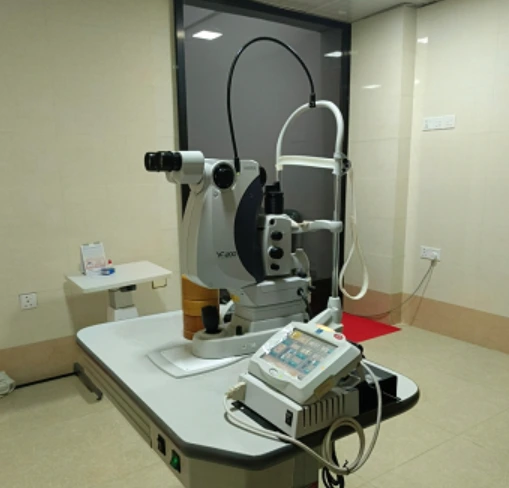
Pathology tests include analyses of blood, urine, stool, and tissue samples. These tests are often required before surgery or when diagnosing medical conditions. The results help guide clinical decisions and treatment plans.

Fluorescein Angiography (FA) is a diagnostic test that helps ophthalmologists evaluate the blood circulation in the retina.
Uses of FA:
It is commonly used to detect and monitor:
It also helps:
Procedure:
After the Test:
Possible Side Effects:
Rarely, an allergic reaction may occur, such as hives or difficulty breathing. In such cases, medical intervention is available.
Color Fundus Photography captures detailed color images of the retina using a specialized camera. This helps document and monitor retinal conditions over time.
Conditions documented with CFP:
Before the procedure, pupils are dilated to improve visibility and allow a broader view of the retina.

Visual Field Analysis measures your peripheral vision. It’s commonly used to assess conditions like glaucoma or detect visual impairment after a stroke.
How it works:
You may blink normally and pause the test if needed.

B-scan ultrasonography uses sound waves to produce an image of the eye’s internal structures. It is helpful in diagnosing:
It is also used before cataract surgery if the view of the eye’s interior is blocked.

Pathology tests include analyses of blood, urine, stool, and tissue samples. These tests are often required before surgery or when diagnosing medical conditions. The results help guide clinical decisions and treatment plans.

OCT is a non-invasive imaging technique that uses light waves to capture cross-sectional images of the retina.
This technology allows ophthalmologists to visualize and measure the thickness of each layer of the retina, aiding in the diagnosis and management of:
Procedure:
If dilated, your eyes may remain light-sensitive for a few hours afterward.

A-scan biometry is a diagnostic ultrasound technique used to measure the length of the eye, which is essential for calculating the power of the intraocular lens (IOL) to be implanted during cataract surgery.
What Does A-Scan Measure?
These measurements are used to determine the ideal IOL power using specific formulas. Accurate biometry is crucial because even small measurement errors can significantly affect visual outcomes after surgery.
How the Test is Done:
Why It’s Important:
Even though modern optical biometry machines like the IOL Master are now common, A-scan is still widely used, especially when the optical pathway is blocked (e.g., dense cataracts). It remains a dependable tool in cataract surgery planning.